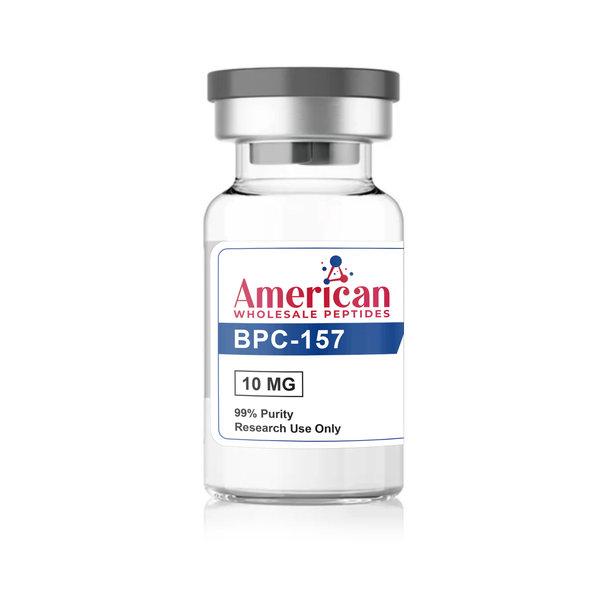
BPC-157 10mg
$39.99
- BPC-157 10mg research peptide supplied as lyophilized powder for laboratory investigation.
- Studied in vitro for cellular signaling, angiogenesis pathways, connective tissue research, and tissue regeneration models.
- Unit Size: 10mg (lyophilized powder, single vial)
- Molecular Weight: ~1419.55 g/mol
- Form: Lyophilized peptide powder
- Use: For in vitro laboratory research only
In stock
Description
BPC-157 | 10mg | Research Peptide
Description
BPC-157 is a synthetic peptide composed of 15 amino acids derived from a protective protein sequence originally identified in gastric tissue. In laboratory environments, this peptide is studied for its interactions with cellular repair mechanisms, angiogenesis pathways, and tissue regeneration models.
Researchers frequently investigate BPC-157 in experimental systems focused on cell signaling, connective tissue models, and wound repair mechanisms. Laboratory studies examine how this peptide interacts with growth-factor signaling pathways, extracellular matrix processes, and cellular migration responses.
Due to its relatively small peptide structure and stability in aqueous laboratory solutions, BPC-157 is often used in controlled research investigating tendon fibroblast signaling, epithelial recovery models, and experimental angiogenesis pathways.
This vial contains 10mg of lyophilized BPC-157 peptide intended strictly for controlled in vitro laboratory research applications.
Specifications
- Compound: BPC-157
- Unit Size: 10mg (lyophilized powder, single vial)
- Amino Acid Sequence: Gly-Glu-Pro-Pro-Pro-Gly-Lys-Pro-Ala-Asp-Asp-Ala-Gly-Leu-Val
- Molecular Formula: C62H98N16O22
- Molecular Weight: ~1419.55 g/mol
- Form: Lyophilized peptide powder
- Solubility: Soluble in sterile or bacteriostatic water according to laboratory protocol
- Storage (lyophilized): Store in a cool, dry environment protected from light
- Storage (reconstituted): Refrigerate between 2–8°C and use according to laboratory protocol
Research Applications
Tissue Repair and Regeneration Research
BPC-157 is commonly investigated in laboratory models examining cellular repair processes, connective tissue signaling, and extracellular matrix interactions involved in tissue recovery mechanisms.
Angiogenesis and Vascular Signaling Research
Researchers study BPC-157 in experimental systems evaluating angiogenesis pathways and growth factor regulation associated with new blood vessel formation.
Cell Migration and Cellular Signaling Studies
The peptide is frequently used in controlled laboratory experiments exploring cell migration, signaling cascades, and cellular communication pathways involved in tissue maintenance.
Inflammatory Pathway Research
Laboratory models may investigate BPC-157 in studies examining inflammatory signaling mechanisms and cellular responses to tissue stress within experimental environments.
Connective Tissue Research
Research systems may utilize BPC-157 to explore mechanisms associated with tendon, ligament, and soft tissue cellular activity in controlled laboratory settings.
Intended Use
Intended strictly for in vitro laboratory research use.
Legal Disclaimer
This product has not been evaluated by the U.S. Food and Drug Administration. No claims are made regarding the treatment, diagnosis, cure, or prevention of any disease. All information provided is intended strictly for scientific and educational purposes only.
Terms of Sale
All sales are final