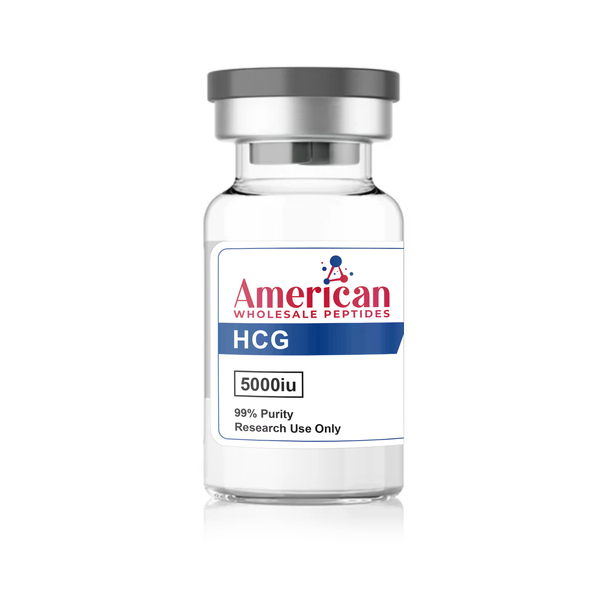
HCG 5000iu
$35.99
HCG (Human Chorionic Gonadotropin) is a glycoprotein hormone composed of alpha and beta subunits, supplied as a 5000 IU lyophilized preparation for in vitro laboratory research. It is widely studied for its interaction with LH/CG receptors and its role in endocrine signaling and reproductive pathway models.
- Unit Size: 5000 IU (lyophilized powder, single vial)
- Type: Glycoprotein hormone (α and β subunits)
- Molecular Weight: ~36.7 kDa
- Form: Sterile lyophilized powder
- Use: For in vitro laboratory research only
In stock
Description
Human Chorionic Gonadotropin (HCG) | 5000 IU | Gonadotropin Peptide Hormone
Description
Human Chorionic Gonadotropin (HCG) is a glycoprotein hormone composed of two subunits (alpha and beta) that belongs to the family of gonadotropins. It is structurally similar to luteinizing hormone (LH) and interacts with LH/CG receptors involved in endocrine signaling pathways. Within laboratory research environments, HCG is frequently utilized to study reproductive endocrinology, hormone signaling, and regulatory pathways involved in steroidogenesis and cellular communication.
This peptide hormone plays an important role in studies involving hormonal regulation, reproductive signaling pathways, and endocrine feedback mechanisms. Researchers investigate HCG to better understand gonadotropin receptor activity, intracellular signaling cascades, and hormone-mediated gene expression related to reproductive physiology and metabolic processes.
In cellular and molecular biology research, HCG is also used in models examining hormone-receptor binding, reproductive tissue signaling, and metabolic interactions influenced by gonadotropins. Its well-characterized structure and receptor interactions make it a useful tool in controlled laboratory investigations focused on endocrine system regulation.
This vial contains 5000 IU of lyophilized Human Chorionic Gonadotropin (HCG) supplied as a white powder in a sealed 3mL vial and intended strictly for controlled in vitro laboratory research applications.
Specifications
- Unit Size: 5000 IU
- Molecular Formula: C1105H1770N306O336S26
- Molecular Weight: ~36.7 kDa
- Form: White lyophilized powder
- Solubility: Requires reconstitution with sterile solvent such as bacteriostatic water
- Storage: Store at ≤25°C sealed and protected from heat, light, and moisture. For long-term storage keep refrigerated at 2–8°C
Research Applications
Reproductive Endocrinology Research
HCG is widely used in laboratory studies investigating reproductive hormone signaling and gonadotropin receptor interactions. Researchers utilize HCG to study luteinizing hormone receptor activation, ovarian and testicular signaling pathways, and endocrine feedback mechanisms that regulate reproductive physiology.
Hormone Receptor Signaling Research
Studies involving HCG frequently focus on LH/CG receptor binding and downstream intracellular signaling pathways. These investigations examine how hormone-receptor interactions influence cyclic AMP signaling, steroidogenic enzyme expression, and cellular communication within endocrine tissues.
Steroidogenesis and Endocrine Regulation
Laboratory models often use HCG to explore the regulation of steroid hormone production and endocrine system feedback loops. These studies help researchers understand how gonadotropins influence hormone synthesis pathways and cellular responses involved in endocrine homeostasis.
Metabolic and Cellular Signaling Research
HCG has also been studied in experimental systems examining metabolic regulation and hormone-mediated cellular signaling. Research may investigate the relationship between gonadotropin signaling and metabolic activity, gene expression, and intracellular regulatory pathways.
Developmental and Cellular Differentiation Models
In certain experimental settings, HCG is used to study cellular differentiation processes and hormone-mediated developmental signaling pathways. These investigations contribute to a broader understanding of how endocrine factors influence tissue development and cellular communication.
Intended Use
Intended strictly for in vitro laboratory research use.
Legal Disclaimer
This product has not been evaluated by the U.S. Food and Drug Administration. No claims are made regarding the treatment, diagnosis, cure, or prevention of any disease. All information provided is intended strictly for scientific and educational purposes only.
Terms of Sale
All sales are final