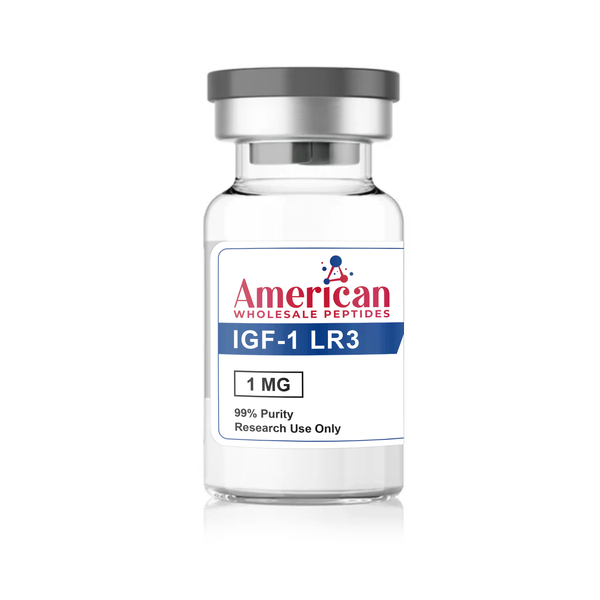
IGF-1 LR3 1mg
$69.99
>
- IGF-1 LR3 1mg synthetic insulin-like growth factor analog for laboratory research.
- Supplied as lyophilized powder for studies involving IGF-1 receptor signaling, PI3K/Akt/mTOR pathway activation, cellular growth regulation, and metabolic pathway analysis.
- Unit Size: 1mg (lyophilized powder, single vial)
- Type: Modified insulin-like growth factor analog
- Molecular Weight: ~9117 g/mol
- Form: Sterile lyophilized peptide
- Use: For in vitro laboratory research only
In stock
Description
IGF-1 LR3 | 1mg | Insulin-Like Growth Factor Analog
Description
IGF-1 LR3 (Insulin-Like Growth Factor-1 Long Arg3) is a synthetic analog of human insulin-like growth factor-1 designed for laboratory research involving cellular growth signaling, receptor activation, and metabolic pathway analysis. This modified peptide contains 83 amino acids compared to the 70 amino acids present in native IGF-1, resulting in structural and functional properties that make it valuable for controlled experimental studies.
The peptide contains two primary structural modifications: a substitution of arginine for glutamic acid at position three (Arg3) and an extended 13-amino-acid sequence at the N-terminus. These modifications reduce binding affinity to insulin-like growth factor binding proteins (IGFBPs), allowing the compound to remain active in experimental systems for longer durations than native IGF-1.
In laboratory models, IGF-1 LR3 is commonly studied for its interaction with the IGF-1 receptor and subsequent activation of intracellular signaling pathways such as PI3K/Akt/mTOR. These pathways are involved in cellular proliferation, protein synthesis, metabolic regulation, and growth factor signaling, making the compound useful in a wide range of cellular biology and metabolic research applications.
This vial contains 1mg of lyophilized IGF-1 LR3 peptide intended strictly for controlled in vitro laboratory research applications.
Specifications
- Unit Size: 1mg (lyophilized powder, single vial)
- Amino Acid Length: 83 amino acids
- Molecular Formula: C400H625N111O115S7
- Molecular Weight: ~9117 g/mol
- Form: Sterile lyophilized peptide
- Solubility: Soluble in sterile water or compatible aqueous laboratory buffers
- Storage: Store lyophilized material at -20°C for long-term storage; reconstituted solutions should be stored at 2–8°C according to laboratory protocol
Research Applications
Growth Factor Signaling Research
IGF-1 LR3 is widely used in laboratory studies investigating insulin-like growth factor receptor activation and downstream signaling cascades. Researchers utilize the peptide to analyze IGF-1 receptor binding dynamics and associated intracellular signaling pathways involved in cellular growth regulation.
Cellular Growth and Proliferation Research
This peptide is commonly applied in studies examining mechanisms of cell proliferation, protein synthesis, and cellular differentiation. Its extended stability in experimental systems allows researchers to observe sustained signaling responses related to growth factor activity.
Metabolic Pathway and Glucose Regulation Research
IGF-1 LR3 is frequently investigated in metabolic research involving glucose transport pathways, nutrient signaling, and lipid metabolism. Laboratory studies often explore how growth factor signaling influences metabolic regulation and energy utilization within cellular models.
PI3K/Akt/mTOR Signaling Pathway Research
Activation of the PI3K/Akt/mTOR pathway is a key area of investigation when studying IGF-1 LR3. Researchers analyze how receptor stimulation initiates downstream kinase activity and signal transduction processes involved in cellular survival and metabolic regulation.
Tissue Development and Cellular Repair Research
Laboratory models have used IGF-1 LR3 to examine signaling mechanisms related to tissue development, cellular repair processes, and regenerative signaling pathways. These studies help characterize how growth factor pathways influence structural and functional cellular responses.
Aging and Cellular Stress Research
Growth factor signaling is also investigated in the context of aging-related cellular changes and stress-response mechanisms. IGF-1 LR3 is used in experimental systems to study how altered growth factor signaling may influence cellular longevity pathways and metabolic stress responses.
Intended Use
Intended strictly for in vitro laboratory research use.
Legal Disclaimer
This product has not been evaluated by the U.S. Food and Drug Administration. No claims are made regarding the treatment, diagnosis, cure, or prevention of any disease. All information provided is intended strictly for scientific and educational purposes only.
Terms of Sale
All sales are final