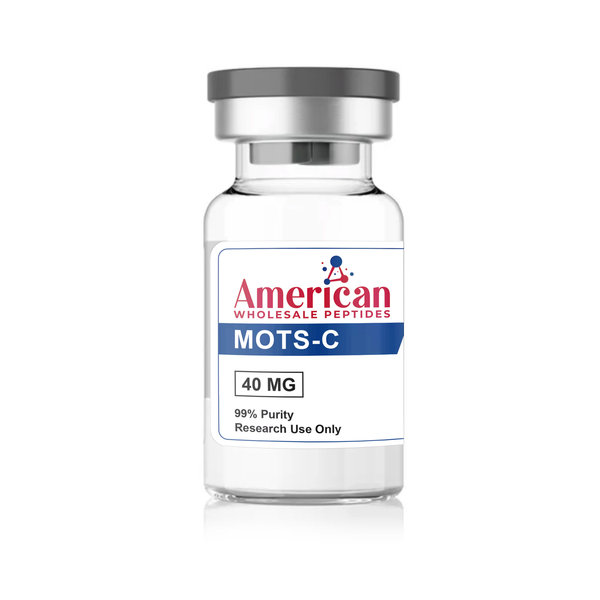
MOTS-C 40mg
$84.99
MOTS-c 10mg is a mitochondrial-derived peptide supplied as lyophilized powder for laboratory research use. Common in vitro research applications include metabolic signaling, mitochondrial communication, glucose homeostasis, cellular stress adaptation, and skeletal muscle metabolism studies.
In stock
Description
MOTS-c | 40mg | Mitochondrial-Derived Peptide
Description
MOTS-c is a mitochondrial-derived peptide of significant interest in laboratory research focused on cellular metabolism, metabolic homeostasis, and stress-response signaling. Encoded within the 12S rRNA region of the mitochondrial genome, this 16-amino-acid peptide is notable for its role in mitochondrial-to-nuclear communication and its relevance in studies examining how cells adapt to changing metabolic conditions.
In experimental settings, MOTS-c has been studied for its relationship to AMPK-associated signaling, glucose utilization, fatty acid metabolism, and adaptive gene-expression responses under metabolic stress. Research also examines its reported nuclear translocation behavior and interactions with transcription-related pathways involved in cellular stress adaptation, including mechanisms associated with NRF2, ATF1, and ATF7.
Because of these characteristics, MOTS-c is commonly used in in vitro investigations involving skeletal muscle metabolism, aging-associated cellular stress, mitochondrial signaling, and models of metabolic dysfunction. This vial contains 10mg of lyophilized MOTS-c peptide intended strictly for controlled in vitro laboratory research applications.
Specifications
- Unit Size: 40mg
- Amino Acid Length: 16 amino acids
- Molecular Formula: C121H200N42O22S2
- Molecular Weight: 1915 g/mol
- Form: Lyophilized powder
- Storage: Store lyophilized peptide at 4°C or below for short-term storage; for long-term storage, keep at -20°C. Reconstituted solutions may be stored at 4°C for limited experimental use. Avoid repeated freeze-thaw cycles.
Research Applications
Metabolic Regulation Research
MOTS-c is widely used in laboratory studies of glucose homeostasis, insulin-resistance mechanisms, and fatty acid metabolism. Its association with AMPK-related signaling makes it relevant in in vitro models examining cellular energy sensing, nutrient stress, and metabolic adaptation.
Mitochondrial and Cellular Signaling Research
This peptide is especially relevant in studies exploring mitochondrial-derived signaling molecules and mitochondrial-to-nuclear communication. Researchers use MOTS-c to investigate how metabolic stress may influence nuclear gene-expression programs and broader intracellular signaling responses.
Aging and Cellular Stress Research
MOTS-c is frequently examined in research involving age-associated metabolic change, oxidative stress, and adaptive stress-response pathways. Its relationship to mitochondrial function and antioxidant-related signaling supports its use in cellular aging and longevity-focused experimental systems.
Cardiovascular and Metabolic Disease Models
In vitro research involving endothelial function, obesity-related metabolic dysfunction, and insulin-resistance models may incorporate MOTS-c to study how impaired metabolism intersects with cardiovascular cellular pathways. These models are useful for investigating the cellular biology underlying metabolic and vascular stress.
Exercise Physiology and Energy Regulation
MOTS-c is also used in laboratory research related to skeletal muscle metabolism and exercise-associated cellular adaptation. Investigators study its role in pathways linked to glucose uptake, energy demand, and mitochondrial signaling during metabolic stress conditions relevant to exercise physiology.
Inflammation and Immune Response Research
Researchers have also applied MOTS-c in studies of inflammatory signaling, immune-cell stress responses, and stem-cell-related cellular regulation. These applications support experimental work aimed at understanding how mitochondrial peptides may influence inflammatory and stress-associated cellular environments.
Intended Use
Intended strictly for in vitro laboratory research use.
Legal Disclaimer
This product has not been evaluated by the U.S. Food and Drug Administration. No claims are made regarding the treatment, diagnosis, cure, or prevention of any disease. All information provided is intended strictly for scientific and educational purposes only.
Terms of Sale
All sales are final